Schools today are handling more responsibilities than ever before. Administrators must manage student records, track attendance, organize examinations, collect fees, communicate with parents, and generate reports. When these tasks are done manually or through different systems, it can create confusion and extra work for staff.
This is where a School ERP system becomes very useful. In 2026, many educational institutions are moving toward digital solutions that help them manage their operations more efficiently.
What is a School ERP System?
A School ERP (Enterprise Resource Planning) system is a software platform that helps schools manage their academic, administrative, and financial activities from one central system.
Instead of using separate tools or paperwork for different tasks, a School ERP connects everything in one place. This makes it easier for administrators, teachers, students, and parents to access information and complete their daily tasks.
A typical School ERP system can help schools manage:
- Student records and admissions
- Class schedules and academic calendars
- Attendance tracking
- Examination management and results
- Fee collection and financial reports
- Teacher and staff management
- Library, transport, and hostel operations
Why Schools Need a School ERP System in 2026
Education is becoming more digital, and schools are expected to work faster and more efficiently. A School ERP system helps institutions meet these expectations.
Here are some key reasons why schools are adopting ERP system
1. Better Organization of School Data
Schools manage a large amount of information every day. Student details, teacher records, class schedules, exam results, and fee payments all need to be stored safely.
A School ERP system keeps all this information organized in one secure database. This makes it easy to find records whenever needed and reduces the risk of losing important data.
2. Saves Time for Teachers and Administrators
Manual processes can take a lot of time. For example, recording attendance, preparing exam reports, or calculating fee records can be repetitive tasks.
With a School ERP system, many of these tasks are automated. Teachers and staff can spend less time on administrative work and focus more on education and student development.
3. Improved Communication
Communication between schools and parents is very important. A School ERP platform often provides portals for students and guardians where they can check:
- Attendance records
- Exam results
- Fee status
- School announcements
4. Accurate Financial Management
Managing school finances is another important responsibility. Schools need to track fee collections, expenses, and financial reports.
A School ERP system can help administrators manage:
- Fee invoices
- Payment tracking
- Fee waivers
- Financial reports
5. Real-Time Reports and Insights
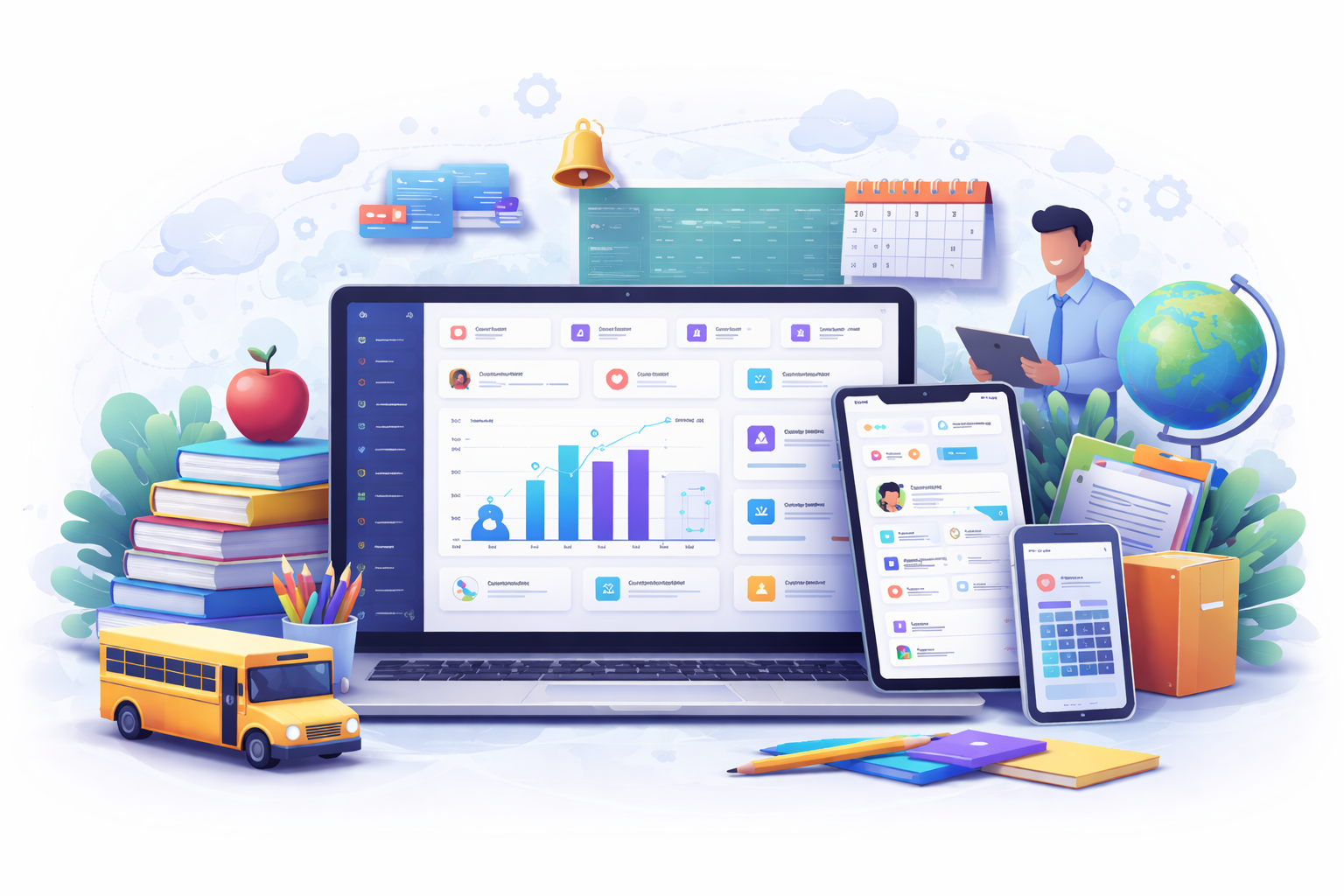
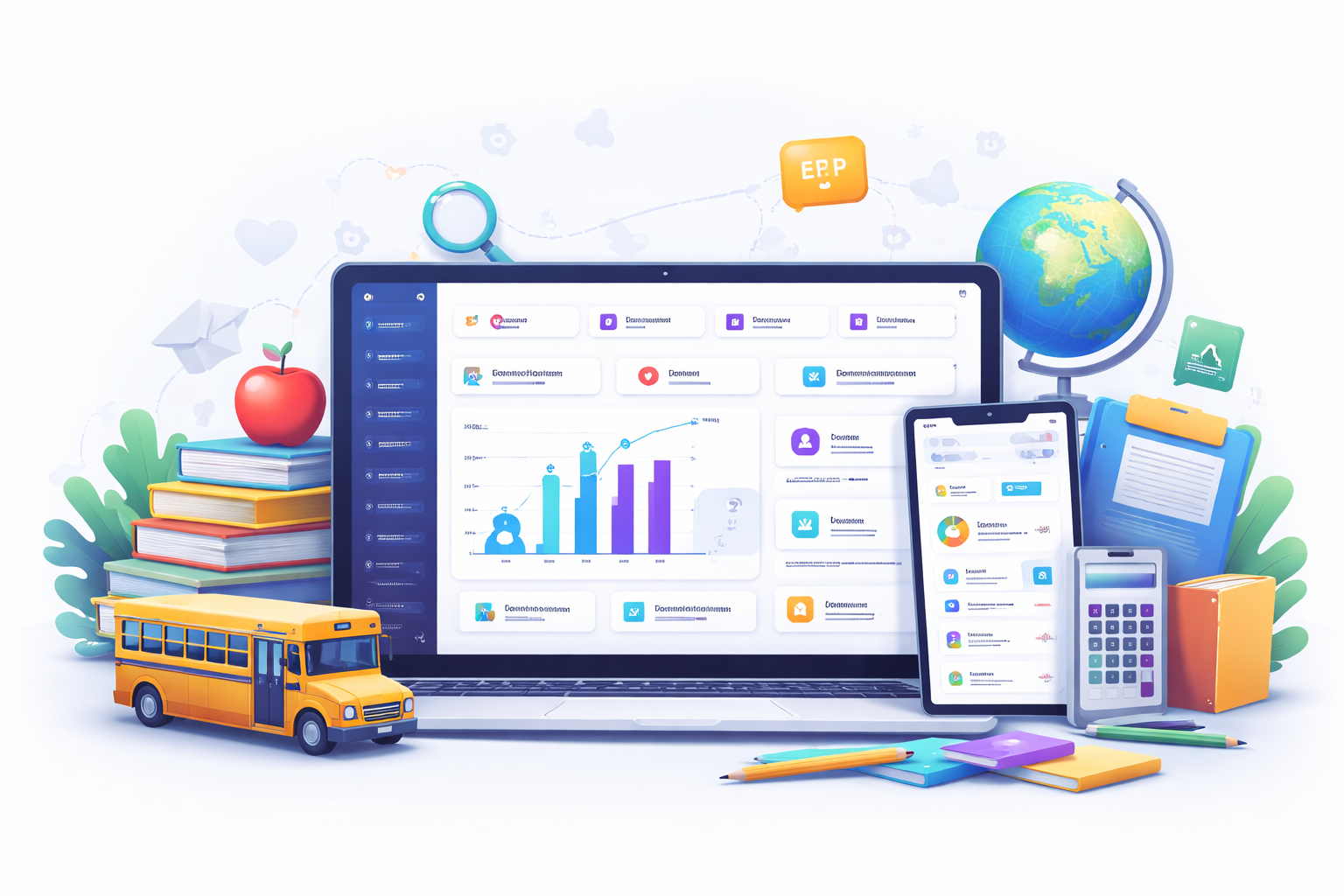
Modern School ERP systems provide dashboards and reports that help administrators understand how the institution is performing.
For example, schools can quickly see:
- Attendance trends
- Academic performance
- Fee collection status
- Financial summaries
Key Features of a Modern School ERP System
In 2026, a modern School ERP platform usually includes several useful modules. Some of the most important features include:
- Academic and class management
- Examination and result management
- Attendance tracking
- Fee management and payment tracking
- Accounting and financial reporting
- Library management
- Transport and hostel management
- Role-based portals for administrators, teachers, students, and parents
The Future of School Management
Technology continues to change how schools operate. Digital tools like School ERP systems help institutions manage their operations more efficiently while improving communication and transparency.
By adopting modern education management systems, schools can reduce administrative workload, improve record keeping, and create a more organized learning environment.
Conclusion
A School ERP system is becoming an essential tool for educational institutions in 2026. It helps schools manage academics, administration, and finances from one centralized platform.
By simplifying daily operations and providing real-time information, a School ERP allows schools to focus more on their main goal—providing quality education to students.